Working With the Dead
“All photographs are memento mori. To take a photograph is to participate in another person’s (or thing’s) mortality, vulnerability, mutability. Precisely by slicing out this moment and freezing it, all photographs testify to time’s relentless melt.”
Susan Sontag (from On Photography)
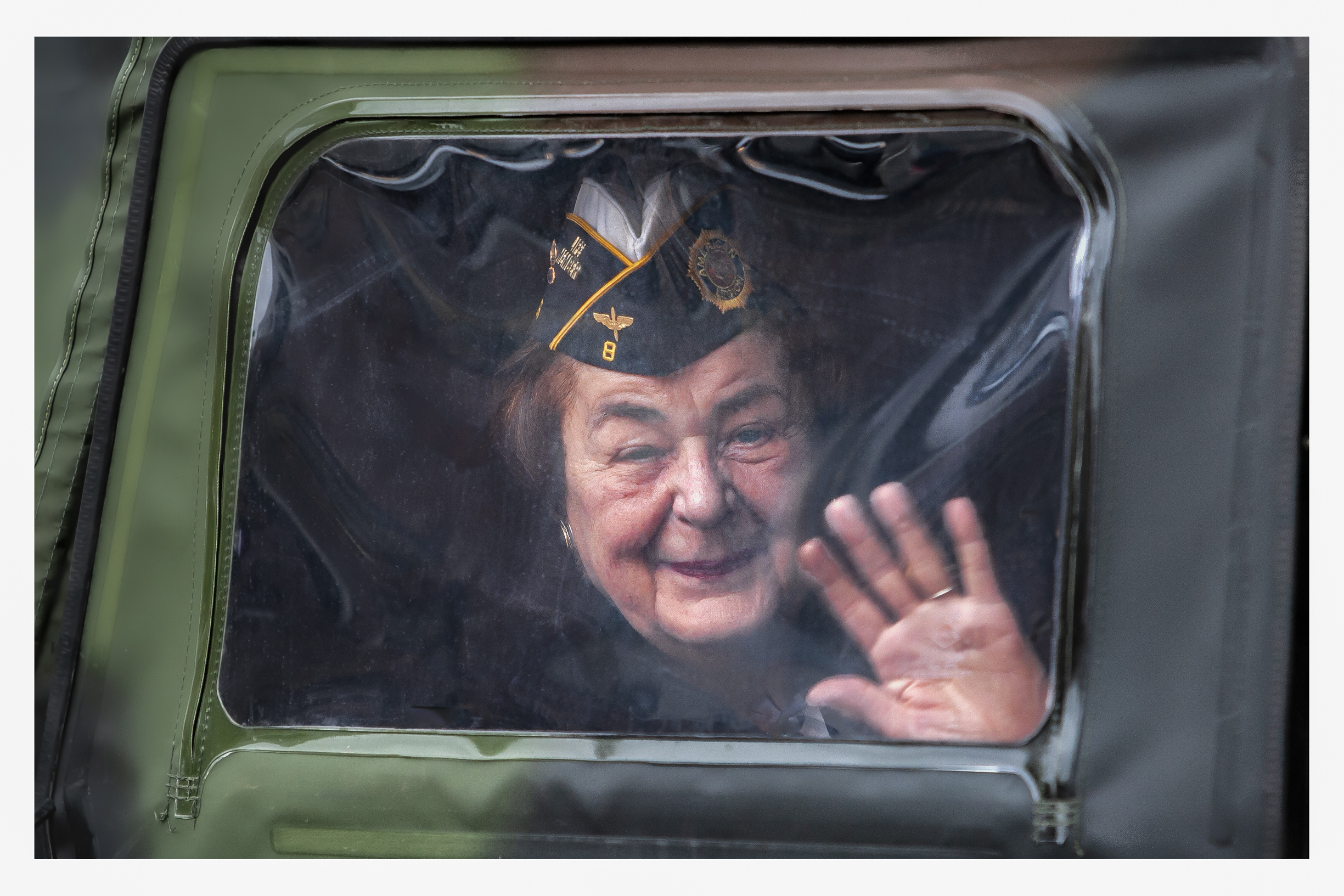
Editing a photograph like this in light of Ms. Sontag’s formulation provokes strange sensations. The photo needed extensive revision, consequently I lived with this portrait for most of an evening. It is a picture of a tiny woman obscured by heavy and rippled plastic, which cast back reflections of the urban street where I stood with my camera. She was a passenger in a military vehicle rumbling past me at twenty miles per hour. The lady’s face is our subject, however it was initially low in contrast, not sharply defined, and that made it difficult to discern her features .
I am now keenly aware I am working with a representation of a deceased human being, captured by me while that person still lived. My photograph is a record of something that no longer exists; not just this narrow slice of a World War II veteran’s life has been lost, but the sentient being herself who waved and looked right at me so pleasantly and openly is gone too. Yet here she is gesturing at us and smiling; that smile seems impenetrable, yet we can believe it was an integral part of her personality, a sign she used in front of people throughout her long life.
Ms. Sontag in the same essay makes this assertion: “A photograph is both a pseudo-presence and a token of absence.” She believed a photograph like this one is an “incitement to reverie.” The subject is very far from us in time and space; therefore our minds will be prone to dreaming with few constraints. Whether our former soldier is a false presence above (a mere token of her own absence) or a real being leaving a material trace of herself (alive again through Art) calls for personal vision and individual metaphysical judgement.