Practicing De-Familiarization
“Art exists that one may recover the sensation of life; it exists to make one feel things….The purpose of art is to impart the sensation of things as they are perceived and not as they are known. The technique of art is to make objects ‘unfamiliar,’ to make forms difficult, to increase the difficulty and length of perception because the process of perception is an aesthetic end in itself and must be prolonged.”
Victor Shklovsky, Russian Writer (b. 1893; d. 1984)
Mr. Shklovsky produced texts dense with ideas. This one demands unpacking. He was a literary critic and theorist, but he speaks in our quote generally about perception, art and aesthetics, therefore I think we may apply his thoughts to photography. Pay attention to his distinction between perceiving and knowing. Most of our knowledge, he says, boils down to the brain functioning like a mathematical machine — we change objects by familiarity into something like algebraic shorthand; it saves time, effort and suffices for navigating our world. We don’t see the objects themselves by perception anymore; instead we are mostly aware of our own coded illusions. Thus, we need art to bring us back from familiar (unconscious) knowledge toward true feelings, or as our writer says, to “recover the sensation of life.”
Shklovsky advises us to make forms difficult, then uses a word he coined in Russian (ostranenie) which translates: de-familiarization. Other renderings are possible: estrangement, or enstrangement. Make it hard for viewers to instantly encrypt an image, but at the same time be intelligible. Stretch out the process of looking until a real visual sensation appears.
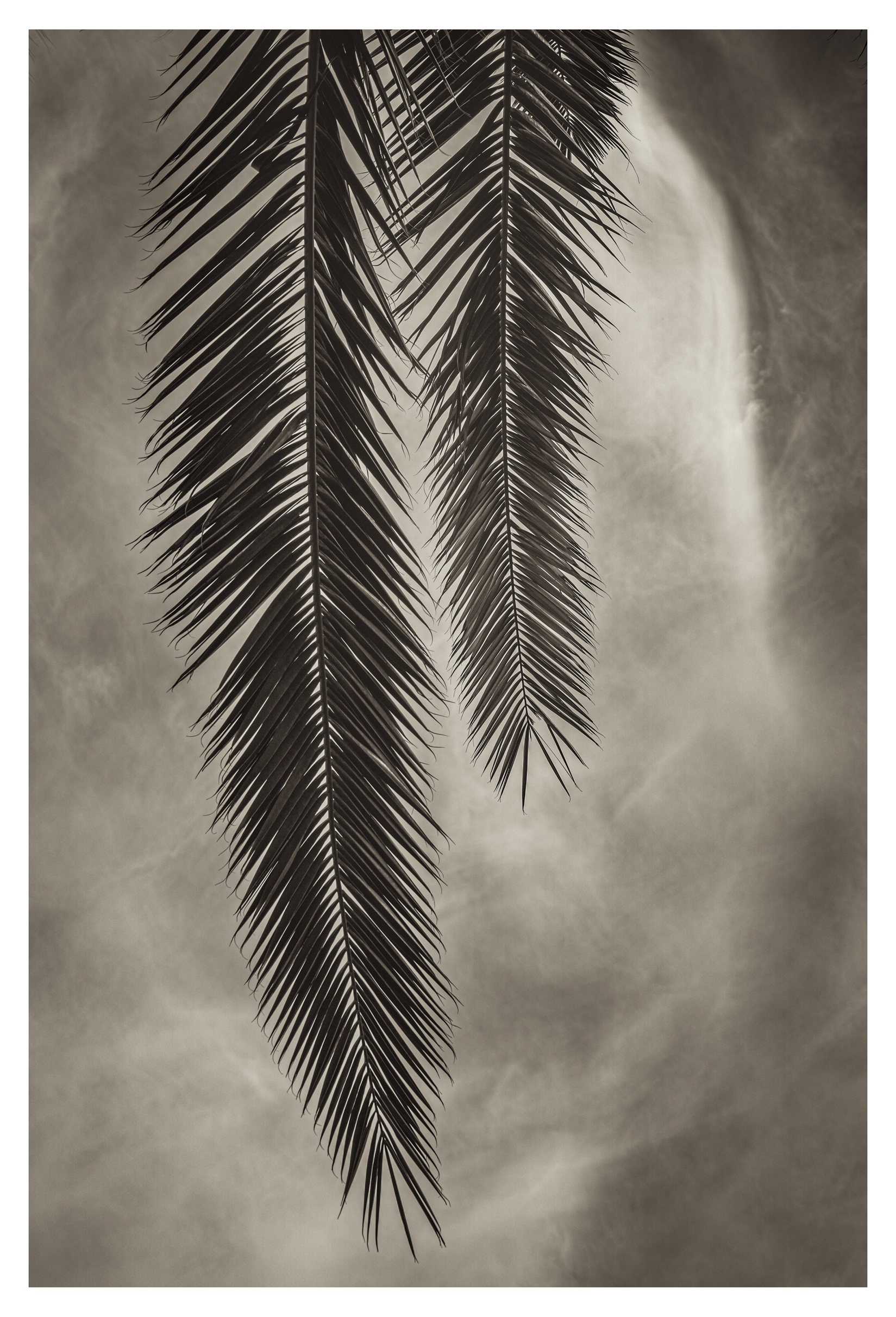
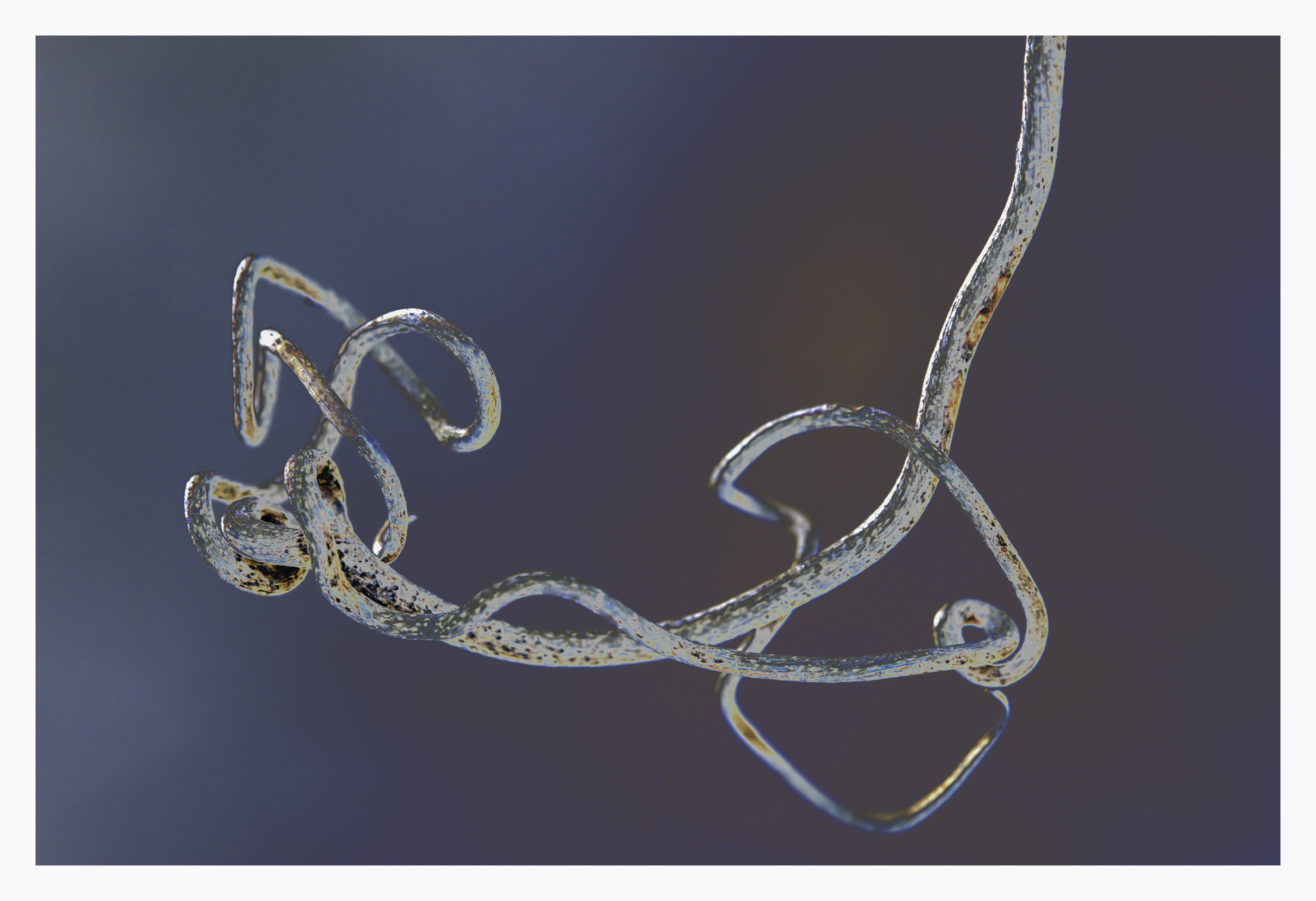
The image above is of a wild grapevine, folded up and twisted like a protein molecule, viewed up close with selective focus and near zero detail in its surroundings. The picture below shows two vertical palm fronds against a cold sky, with clouds appearing as if beaten and formed out of metal.