Concerning My Belated Visit to the Hermitage
While serving at a remote Air Force station in Alaska, I discovered Art History. We lived in dense forest inhabited by wolves among other wild beasts. Our base was in effect an isolated town with three paved streets. One two-story dormitory sat in the middle of everything, housing one hundred-fifty enlisted men; a day room, commander’s office and chow hall were attached. A road patrolled by military police led several miles through evergreen trees to a windowless shed, where cryptographers worked to decode captured communications.
Among out-buildings I discovered a library; it was stored in a Quonset hut having the floor space of a two-car garage. I found it packed with history volumes and biographies. The place became a refuge for me during our long-drawn-out and desolate periods of winter darkness. Two books on the life of Rembrandt van Rijn fascinated me and caused me to plan a trip to Europe while on leave between duty stations. My first pilgrimage led me to the National Gallery in London, where I spent half a day enjoying their collection of Rembrandt paintings. It frustrated me that I could not continue my journey to another shrine: The Hermitage in Saint Petersburg, Russia. It was Soviet Union times and I could not obtain permission to enter the country.
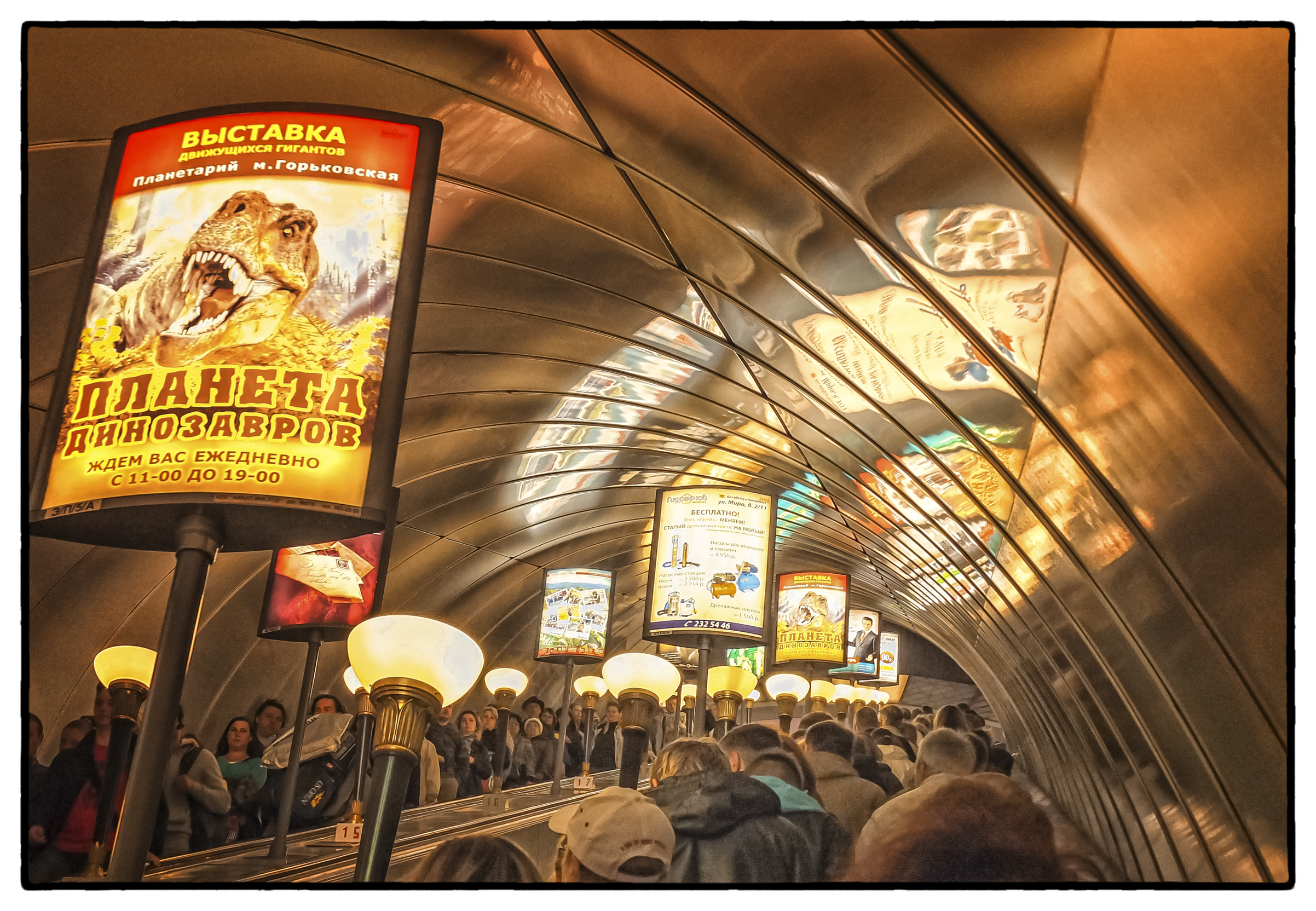
That is the historical context of the photograph, created in 2012. That summer in Russia I completed my second dreamed-of pilgrimage forty-two years after my visit to England as an Airman. I spent an entire day among the Old Masters oil paintings at the Hermitage — nearly half that time in a cavernous gallery dedicated to the greatest of Dutch artists. The photo above shows the atmosphere in the underground tunnels of the local transportation system on my way to downtown St. Petersburg.
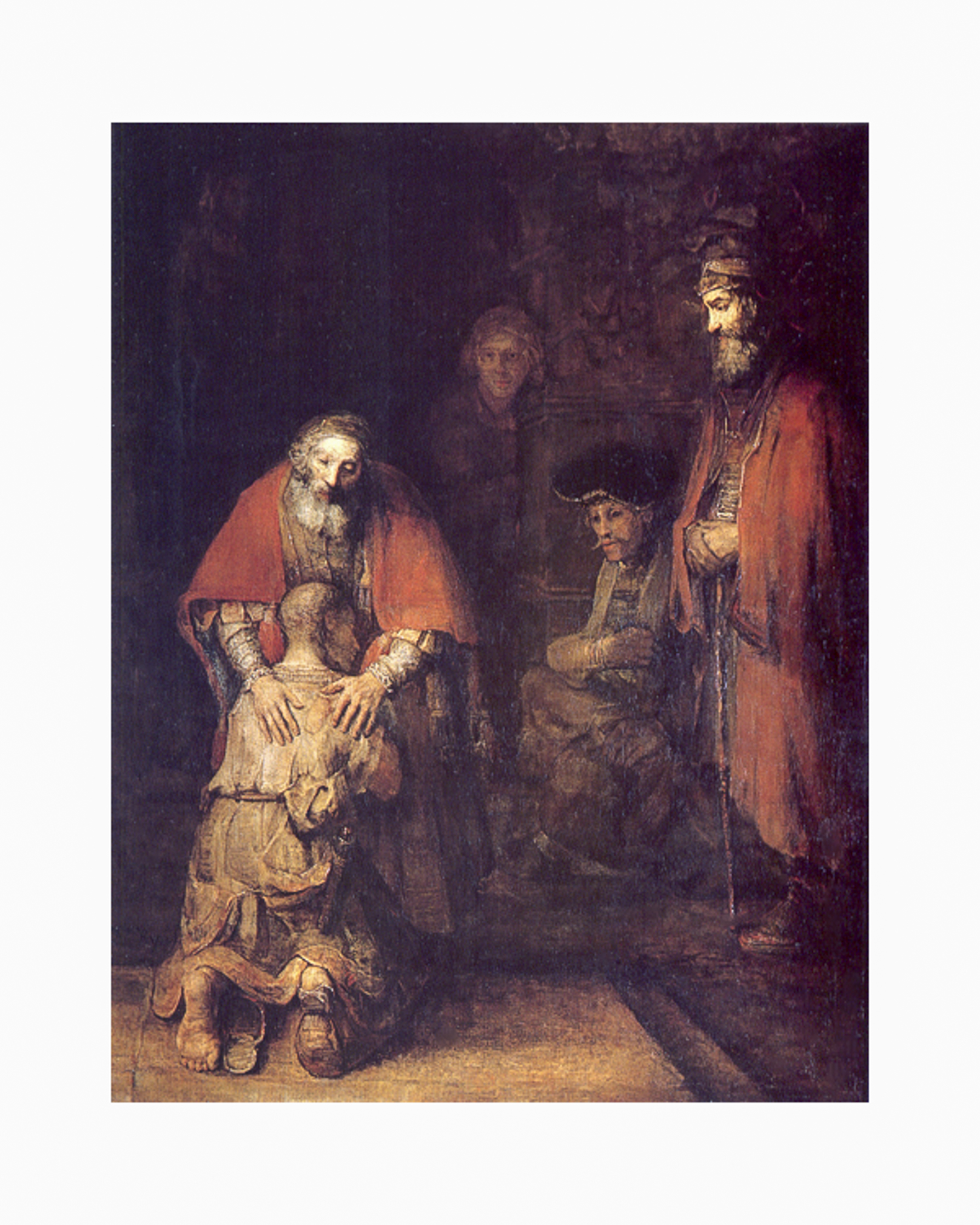
On that day finally I made it to the Neva River and the Hermitage to show my respect for Rembrandt — and his Prodigal Son: